Here is how to get snow removal contracts from the federal government: register on SAM.gov, add NAICS code 561790, and bid before the season starts. Federal agencies obligated $43.5 million on snow removal and salt services in fiscal year 2025, per USASpending.gov. Small businesses won 75 percent of that money.
But the calendar is strict. Agencies obligate more than half of each year’s snow removal dollars in October and November. The solicitations post weeks before that. If you wait for the snow, you already missed the season. I run Procura Federal, and I watch these solicitations appear on SAM.gov every fall. This guide gives you the numbers, the codes, and the bid process.
How much does the government spend on snow removal?
Federal agencies obligated $43.5 million on contracts coded to product service code S218, Snow Removal/Salt, in fiscal year 2025. That is 52 percent more than in fiscal year 2024.
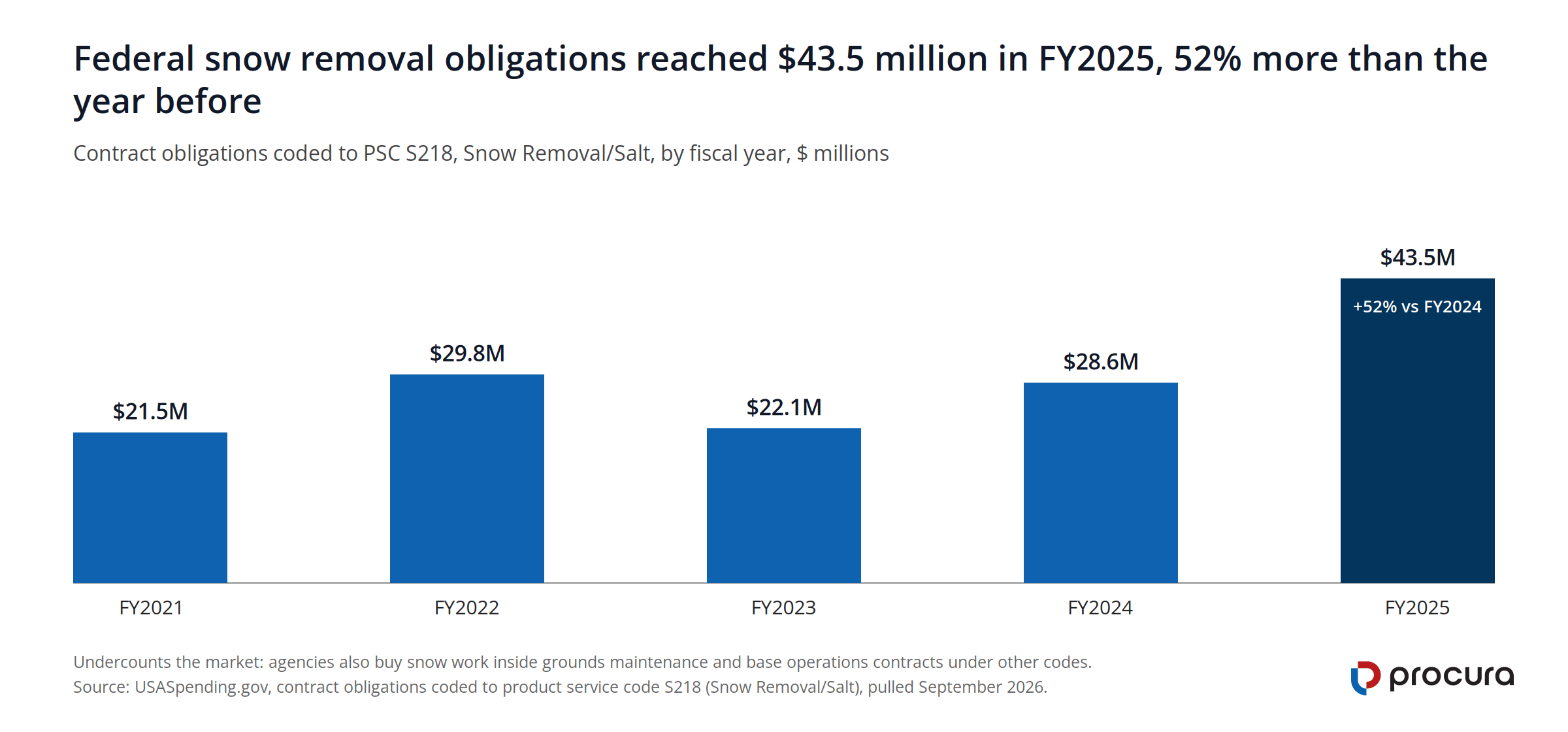
Data table: snow removal obligations by fiscal year
| Fiscal year | Snow removal obligations (PSC S218) |
|---|---|
| FY2021 | $21.5 million |
| FY2022 | $29.8 million |
| FY2023 | $22.1 million |
| FY2024 | $28.6 million |
| FY2025 | $43.5 million |
However, these numbers undercount the real market. Agencies bundle snow work into grounds maintenance and base operations contracts under other codes. One Air Force contract at Misawa Air Base pays $6.4 million for snow removal and grass cutting together. So when you search only for snow, you miss that money.
Which federal agencies are the biggest buyers?
The Department of Defense is the largest buyer of government snow removal contracts. That is because military bases must have cleared runways, roads, and parking areas every day of winter. DoD obligated $29.2 million on snow removal in fiscal year 2025, which is 67 percent of the federal total.
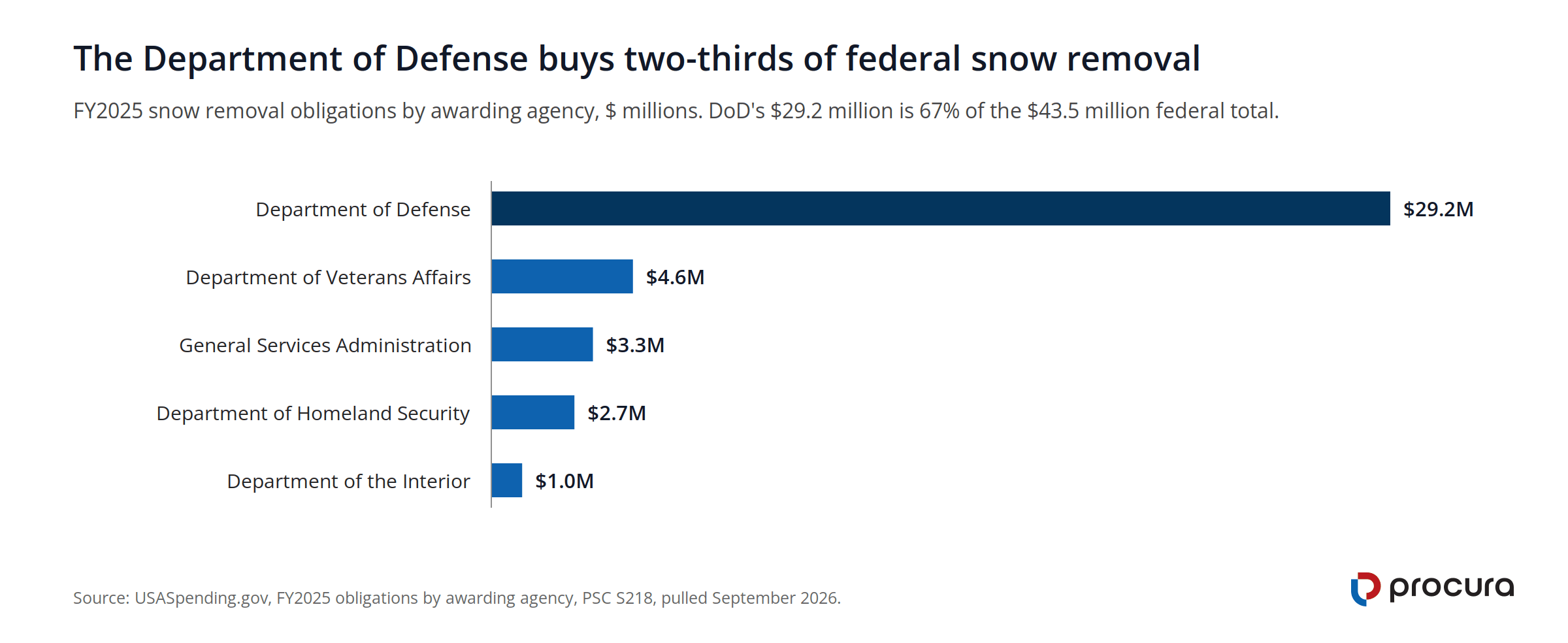
Data table: FY2025 snow removal obligations by agency
| Agency | FY2025 snow removal obligations |
|---|---|
| Department of Defense | $29.2 million |
| Department of Veterans Affairs | $4.6 million |
| General Services Administration | $3.3 million |
| Department of Homeland Security | $2.7 million |
| Department of the Interior | $1.0 million |
VA medical centers cannot close for weather, so their snow contracts include strict response times. Meanwhile, GSA clears federal office buildings and courthouses. Similarly, Customs and Border Protection clears border stations. One fiscal year 2025 CBP contract for Border Patrol stations in Washington State was worth $4.0 million.
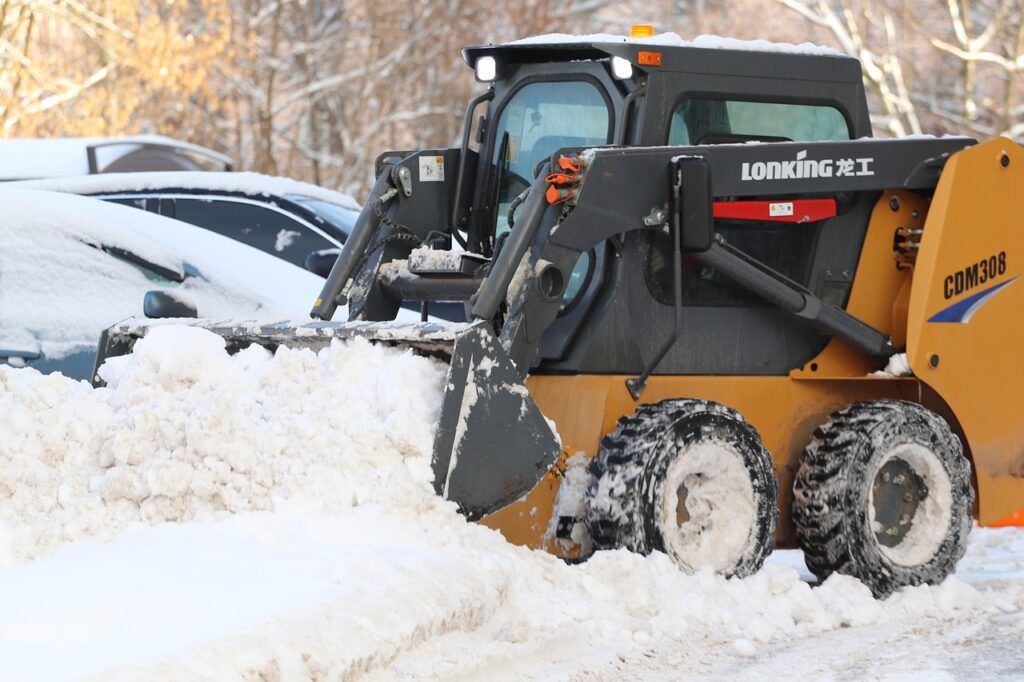
The work concentrates where the snow falls. New York, Maryland, Virginia, Alaska, Pennsylvania, and Massachusetts led all states in fiscal year 2025 snow removal obligations. Washington, DC is also on that list, because GSA clears the federal core after each storm.
What NAICS and PSC codes do snow removal contracts use?
Add every code that matches your services to your SAM.gov profile, because contracting officers use these codes to find vendors and to send RFQs.
| Code | Type | What it covers | Small business size standard |
|---|---|---|---|
| 561790 | NAICS | Snow plowing for driveways and parking lots | $9.0 million average annual receipts |
| 561730 | NAICS | Snow plowing combined with landscaping services | $9.5 million average annual receipts |
| 488490 | NAICS | Snow clearing for highways, bridges, and runways | $18.0 million average annual receipts |
| S218 | PSC | Snow removal and salt service | Not applicable |
If your average annual receipts are below the size standard, you qualify as a small business for that code. That matters because small businesses won 75 percent of federal snow removal dollars in fiscal year 2025. Agencies set many of these contracts aside for small businesses only. Some solicitations reserve the work for 8(a), HUBZone, or service-disabled veteran-owned firms only. If you hold one of those certifications, your competition pool shrinks again.
In addition, landscaping companies have an advantage here. The trucks, the crews, and the government customers are the same in winter and in summer. If you hold a government landscaping contract, snow removal is the winter half of the same business.
What do you have to do to get snow removal contracts?
The registration process is free and takes two to four weeks. If you want to bid this season, complete these steps now:
- Register your business on SAM.gov. Our SAM.gov registration guide explains each step.
- Add NAICS codes 561790, 561730, and 488490 to your entity profile.
- Write a one-page capability statement. Our capability statement guide gives the format.
- List your equipment in that statement: plows, spreaders, loaders, and trucks.
- Get commercial liability insurance. Most solicitations require proof of coverage before award.
- Search SAM.gov Contract Opportunities for “snow removal” and PSC S218.
- Read the full solicitation package, including all attachments.
- Submit your quote before the deadline.
Each step is simple. Still, the discipline is in step 7. The performance work statement, the wage determination, and the site maps hide in the attachments. That is how to get snow removal contracts from federal agencies.

When do agencies post these solicitations?
October and November account for 51 percent of annual snow removal obligations, per USASpending data for fiscal years 2023 through 2025. The contracts start with the season and run through April. Solicitations post weeks before award, so the bid window is August through October.
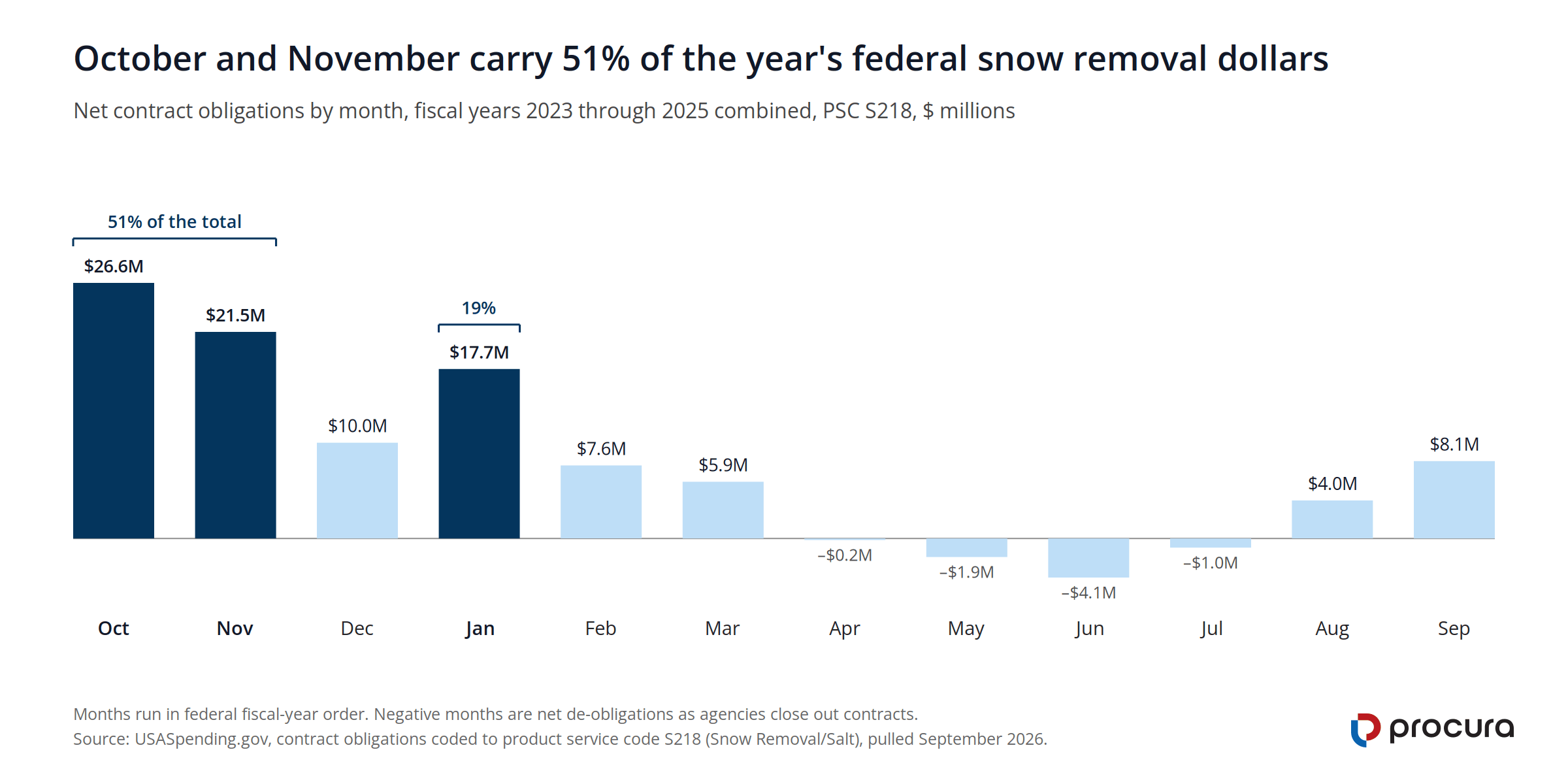
Data table: snow removal obligations by month, FY2023–FY2025
| Month | Net obligations, FY2023–FY2025 combined |
|---|---|
| October | $26.6 million |
| November | $21.5 million |
| December | $10.0 million |
| January | $17.7 million |
| February | $7.6 million |
| March | $5.9 million |
| April | -$0.2 million |
| May | -$1.9 million |
| June | -$4.1 million |
| July | -$1.0 million |
| August | $4.0 million |
| September | $8.1 million |
| Total | $94.2 million |
January is the third-largest month, at 19 percent of obligations. Agencies buy more after mid-season storms, and that is the late entry point for new vendors.
Moreover, most awards include a base year plus option years. The VA awarded one contract for snow removal and groundskeeping at the Anchorage VA Medical Center worth $2.8 million across its option periods. Win one seasonal contract, do the work well, and the agency can extend you for four more winters.
As a result, this structure rewards early movers. The vendor who wins in September holds the customer until the options run out. If you read this in September, you are on time. If you read this in December, prepare for next August. Or watch for the emergency purchases that appear after big storms.
How much is a typical snow removal contract?
Federal snow removal contracts range from purchases below $15,000 to multi-year awards above $6 million.
In fact, the small end matters more than most vendors think. The federal micro-purchase threshold is $15,000, effective October 1, 2025, per FAR 2.101. Below that line, a contracting officer can buy directly, with minimal competition. A facility manager who must clear a lot today calls a registered vendor who answers the phone.
The middle is where small businesses win most. Purchases below the $350,000 simplified acquisition threshold use faster procedures. When two or more small businesses can do the work, the agency must set the contract aside for small businesses.
Finally, the top end is real but crowded. The largest fiscal year 2025 awards ran from $4.0 million to $6.4 million. Those went to established incumbents with full equipment fleets.
Price structures vary. In the solicitations I read, agencies use three patterns:
- A fixed price for the season
- A price for each snow event
- A price for each inch of snowfall
Read the price schedule carefully, because the pattern changes your risk. A fixed seasonal price in a light winter is a windfall. However, the same price in a record winter is a loss.
What labor rules apply to federal snow work?
The Service Contract Act applies to federal service contracts above $2,500. You must pay your workers at least the wage and fringe rates in the wage determination attached to the solicitation. Find the rates for your county at sam.gov/wage-determinations.
Therefore, price your labor from the wage determination, not from your commercial rates. This is the most common price mistake I see from new federal vendors. A bid built on commercial wages can win the award and then lose money all winter.
Agencies also rate your performance after award. So do the work and meet the response times. Your past performance record then becomes your best sales asset for the next bid.
Can you get snow removal contracts without your own equipment?
Yes, through subcontract work. Large facilities contractors hold base operations contracts that include snow removal, and they hire local plow operators as subcontractors. Search USASpending.gov for the prime contractors who won snow removal awards in your state. Then contact them about subcontract work.
Also, owner-operators with dump trucks have a second angle. Big storms create snow hauling work, and agencies buy hauling under trucking codes. Our government trucking contracts guide explains that path.
Are federal snow contracts better than city and state contracts?
States and cities spend more on road plowing than federal agencies do. Bid those too. But federal work has two advantages. First, every federal opportunity appears in one free portal, SAM.gov, with one registration. Second, federal agencies pay reliably on 30-day terms under the Prompt Payment Act.
Procura Federal tracks federal opportunities only. For city and state bids, register with your state procurement office and your county governments directly.
Finding snow contracts is easy. Qualifying them is the hard part.
A SAM.gov search for snow removal returns a list in seconds. Then the real work starts. Each package contains a performance work statement, a wage determination, site maps, and insurance requirements. The details that disqualify you, or that change your price, live in those attachments.
Procura Federal reads the full package for you. You upload your capability statement once. Procura then analyzes every new opportunity against it, attachments included, and scores it from 0 to 3 stars. You see the requirements, the risks, and the deadlines before you spend an evening on a bid you cannot win. It costs $399/month, less than one plow blade.
The snow season does not wait, and neither do the incumbents. Book a demo below, and bring a solicitation you are not sure about. We will score it live on the call.